Advancing Mechanical Jigging to Strengthen Squid Fishery Resilience Amid Offshore Wind Development
General Description
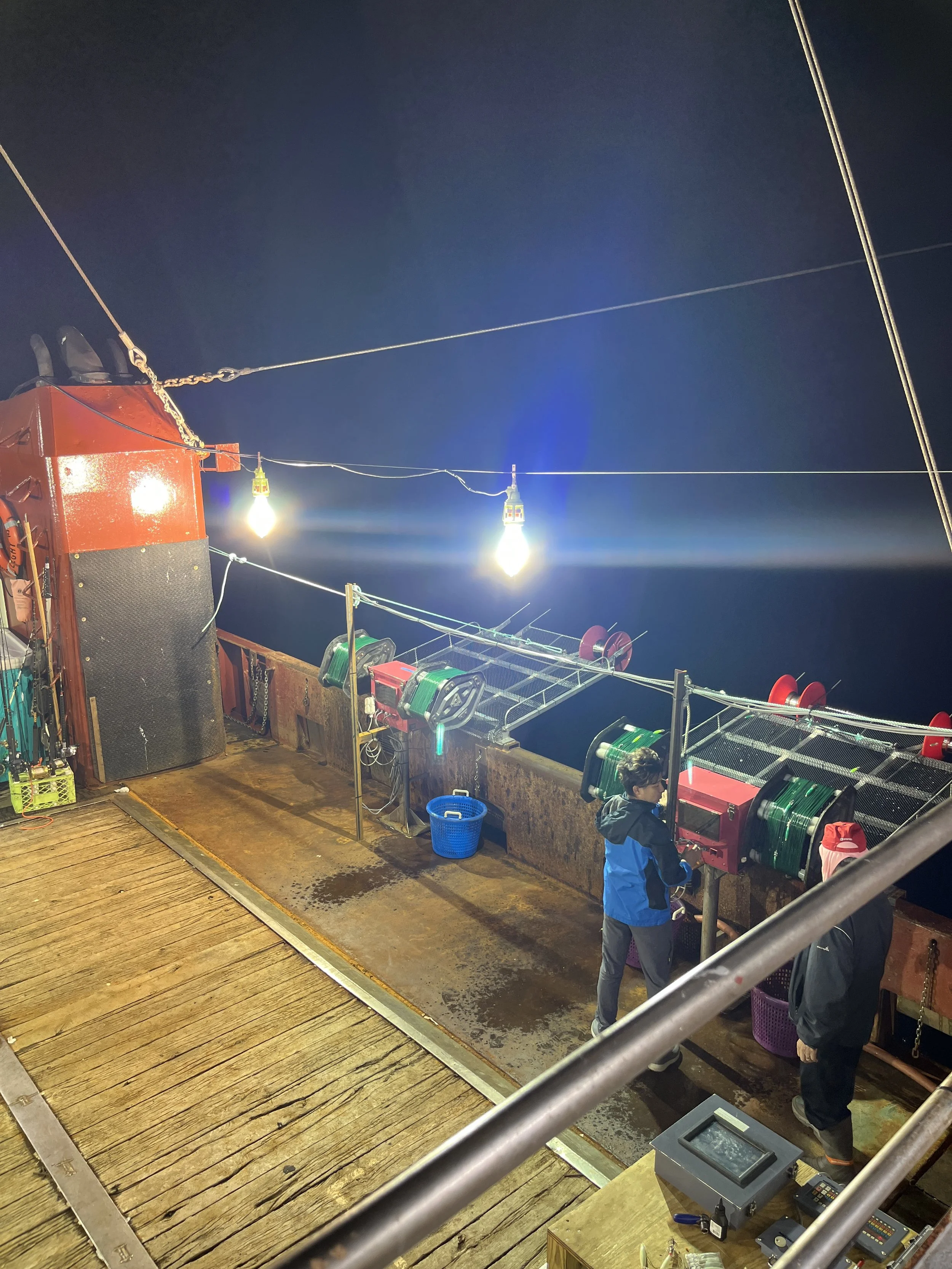
Jigging machines aboard the F/V Kathy Ann.
Expanding fishing opportunities in New England waters through technology development and identification of underutilized stocks is a shared mission of CFRF and the Coonamessett Farm Foundation (CFF). One promising advancement in this field is the implementation of automatic jigging machines for squid fishing. This innovation is particularly relevant to building resilience to offshore wind as it may allow for continuous squid fishing within wind farms or expanded squid fishing grounds.
Over the past several years, CFRF has worked with The Town Dock, a major squid producer in RI, and local fishermen to trial automatic squid jigging machines in Southern New England waters. Simultaneously, CFF has been working with Atlantic Shellfish Inc., Quinn Fisheries, and Viking Village Seafood, who are interested in converting vessels to use automatic jigging machines. Both organizations have been collaborating with representatives from Japan Fishing Machine, a leading manufacturer of automatic squid jigging machines.
Recently, CFRF and CFF entered a partnership to purchase and share equipment from Japan Fishing Machine and to further integrate efforts to develop mechanical jigging. This project will build upon lessons learned from CFRF’s and CFF’s previous efforts. It focuses on improving catch rates while simultaneously showing applicability near offshore wind farms and in waters beyond the continental shelf.
Collaborators:
Katie Almeida, The Town Dock
Mike Roderick, The Town Dock
Stacy Alexander-Nevells, Atlantic Shellfish, Inc.
Keiichiro (Kei) Hamano, Japan Fishing Machine LLC
Project Team
Primary Investigators
N. David Bethoney, CFRF
Matt Rodriguez, CFRF
Ryan Munnelly, CFF
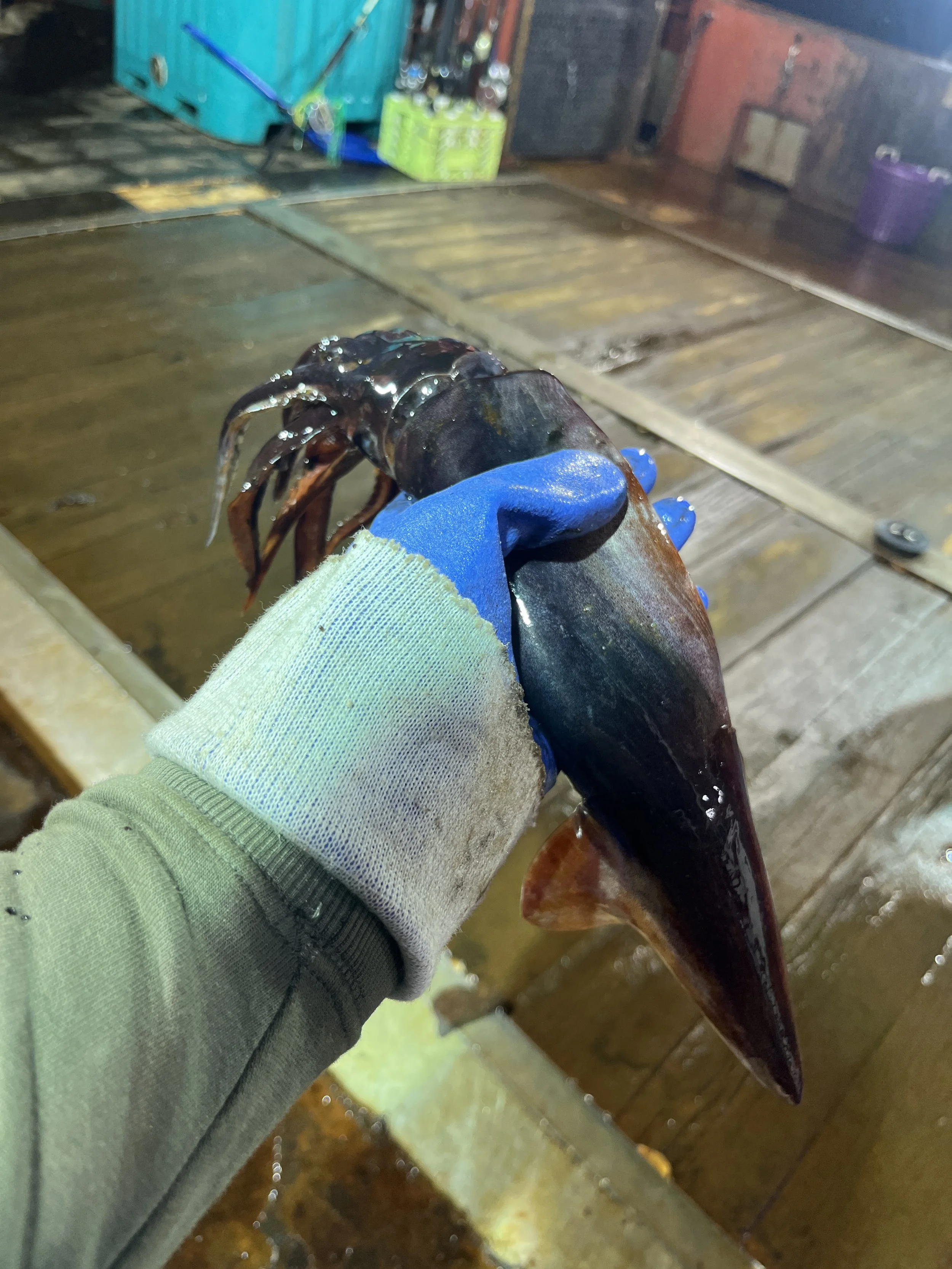
Neon flying squid (Ommastrephes bartramii).
Project Objectives
Leverage knowledge gained during the previous projects (CFRF examples here, here, and here) to streamline the process needed to outfit these machines aboard fishing vessels
Maximize catch rates using the techniques learned from Japanese collaborators during previous projects
Develop a standard operating procedure for deploying this gear type
Compare catch efficiency and quantity of captured squid, including both coastal and oceanic species, to the amount needed for economic viability
Develop outreach materials and share results with relevant communities and regulatory bodies
This project is supported by:
Massachusetts Division of Marine Fisheries’ Massachusetts Fisheries Innovation Fund.