Testing Materials for Developing a Low-Cost Recovery Tag for Ghost Traps
general description:
Rhode Island supports several commercial trap-based fisheries. The traps, with their associated lines and buoys, are highly susceptible to damage and loss due to marine traffic, tidal currents, and storm events. Once lost, these traps and trawl lines are challenging to locate, resulting in lost revenue in fishing time and gear replacement costs. To address this challenge, several electronic recovery tags have been developed for commercial traps. These tags can be costly and are designed to send signals to specially designed consoles on fishing vessels, making them prohibitive for many commercial fishermen.
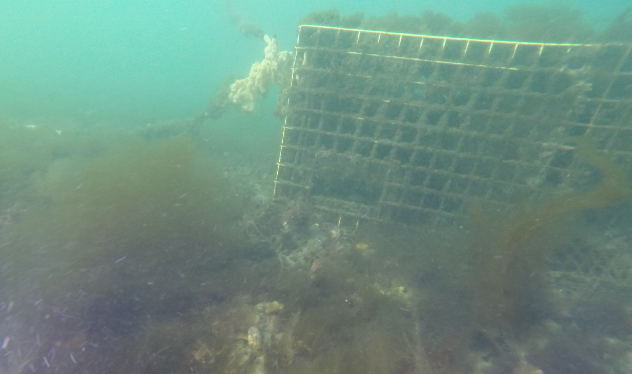
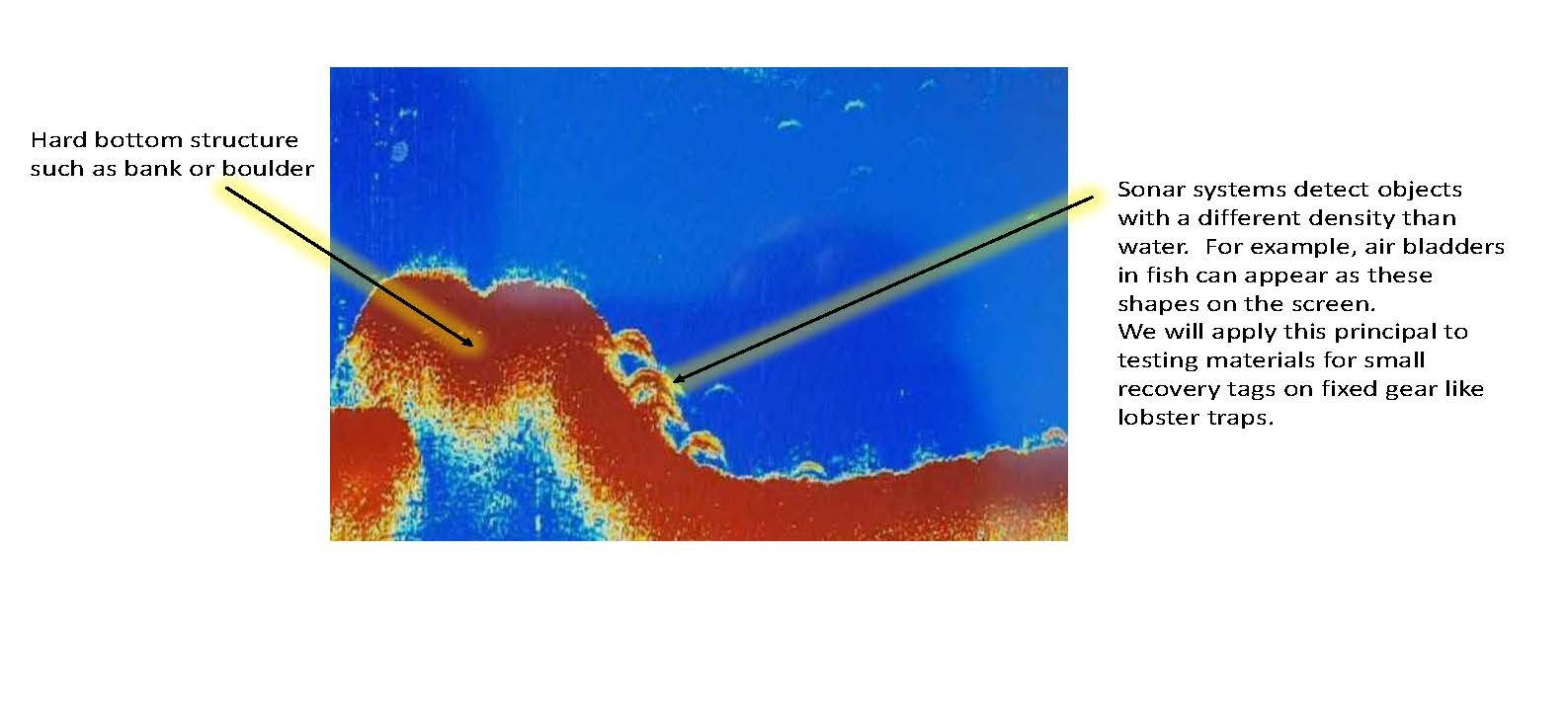
Fishing vessels are usually equipped with sonar systems that could be used to detect tags without specialized equipment. These systems work by emitting ultrasonic sound waves through a transducer and then reading an echo or “signature” when they detect objects with a different density than water. Gillnet floats are known to produce very strong sonar signals, as are some highly reflective metals. This project will test the sonar signal of these materials using an experimental trawl and commercial fishing vessel sonar equipment at four depths. Using underwater cameras, it will confirm that the addition of the tag does not interfere with the typical fishing behavior of the trap. In addition to working with commercial fishermen, an intern position will be supported for an undergraduate in the Ocean Engineering Department at the University of Rhode Island.
The ability of fishermen to quickly locate and recover lost traps will reduce the economic costs associated with lost gear, interactions with other active commercial fishing activities, and the impacts of ghost traps on the environment.
Project Goal:
Provide “proof of concept” in the development of low-cost recovery tags using commercially available materials and technology to enhance sonar detection of commercial traps
Project Objectives and Methods:
Deploy an experimental trawl with the test recovery tags at four stations representing different depths
Test materials for recovery tag:
Two gillnet float materials (plastic vs foam)
Metal reflective aluminum tag
Commercial fishing vessel tests detection strength using onboard commercial sonar system
Deploy underwater cameras to collect images of any impacts of the experimental tag materials on trap orientation.
Disseminate results and communicate findings to the academic, public, and commercial fishing communities
After we post results, we will add a Google form to this webpage where fishermen can post their feedback and recommendations
project team:
Commercial Fisheries Research Foundation
Susan Inglis - CFRF Project Lead
N. David Bethoney
Jack Moore
The University of Rhode Island Ocean Engineering Department
This Project is Supported By:
NOAA Sea Grant and University of Rhode Island’s Partnership for Research Excellence in Sustainable Seafood (PRESS)