Evaluating the Hazard of Trawling Over Cable Protection Mattresses
General Description
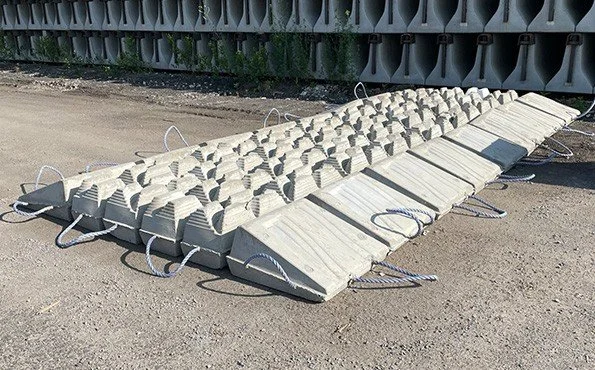
Tapered-edge concrete cable protection mattress, similar to those installed along the Revolution Wind Export Cable route. Photo credit: ECOncrete, 2023
The burial of submarine cables associated with offshore wind development is the standard best practice to reduce entanglement, gear loss, and damage hazards from commercial fishing operations. In areas where seafloor conditions or other factors don’t allow for cable burial, cable protection measures such as concrete mattresses are used instead. Concrete protection mattresses have been extensively installed along windfarm cable export routes in southern New England, despite limited data regarding the interaction between commercial fishing operations and these mattress structures.
Commercial trawlers and draggers face uniquely elevated safety risks to both crew and vessel when gear becomes hung up or snagged. Instances of hung gear impose sudden and extreme loads on wire, machinery, and the vessel itself. This can cause flooding, sinking, excessive rolling, or a dangerous list. Damage resulting from gear interaction with bottom obstructions can range from minor net damage to major loss of gear, vessel, life, or limb. Fishermen have expressed concerns about the potential hazards and uncertainty of fishing near these mattresses, and have avoided trawling in locations they have historically fished due to the presence of cable mattresses. This project aims to develop a safe, low-cost method for assessing risk to commercial fishing operations near offshore wind cable protection measures.
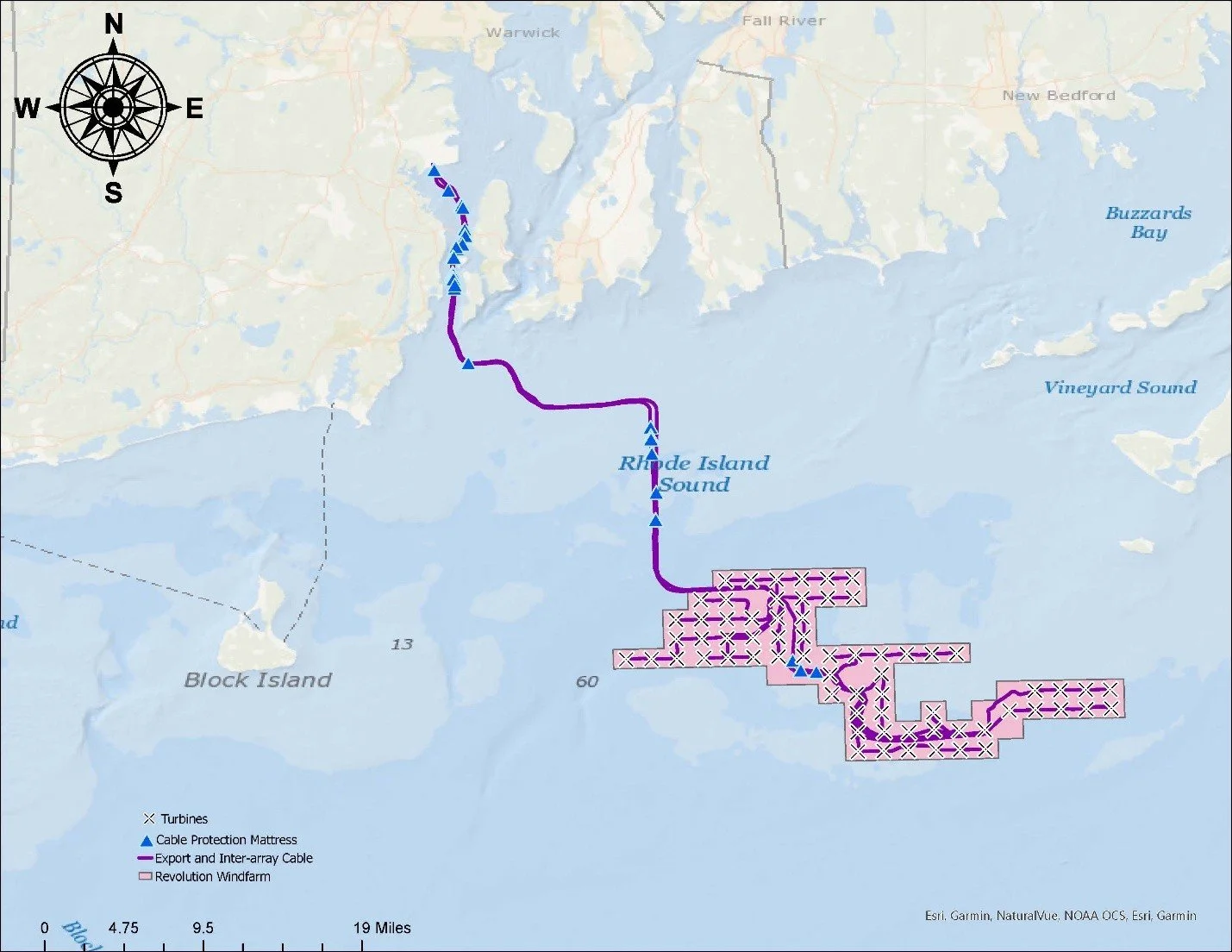
Revolution Windfarm and its associated submarine cable route and cable protection structures.
Project Team
CFRF
Ruby Dener - Project Lead
N. David Bethoney
Collaborators:
Jeff Grant, Captain and Owner, F/V Provider
Jonathon Knight, Owner, Superior Trawl LLC
Brennan Phillips, Associate Professor-Department of Ocean Engineering, University of Rhode Island
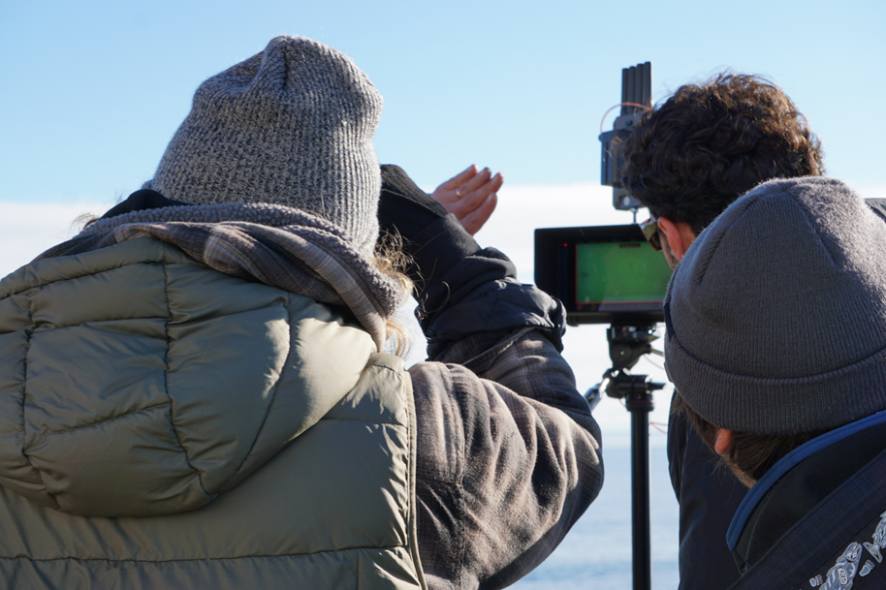
CFRF research biologist and students from the Undersea Robotics & Imaging Laboratory view live imaging of the Narragansett Bay seafloor.
Project Objectives
Develop and test a methodology for assessing risks to commercial fishing operations collocated with offshore wind cable protection measures
Analyze 5 cable protection mattresses in Narragansett Bay, RI for risk of hangs across various gear configurations, tow directions, and speeds.
Document and describe all interactions between fishing gear and mattresses.
Collect industry feedback on trawl gear handling, safety, and performance when fished over cable protection mattresses.
Communicate results to both the commercial fishing and offshore wind industries
This project is supported by:
Massachusetts Division of Marine Fisheries’ Massachusetts Fisheries Innovation Fund.